
Use Cases
Customer Data Access for Software Vendors
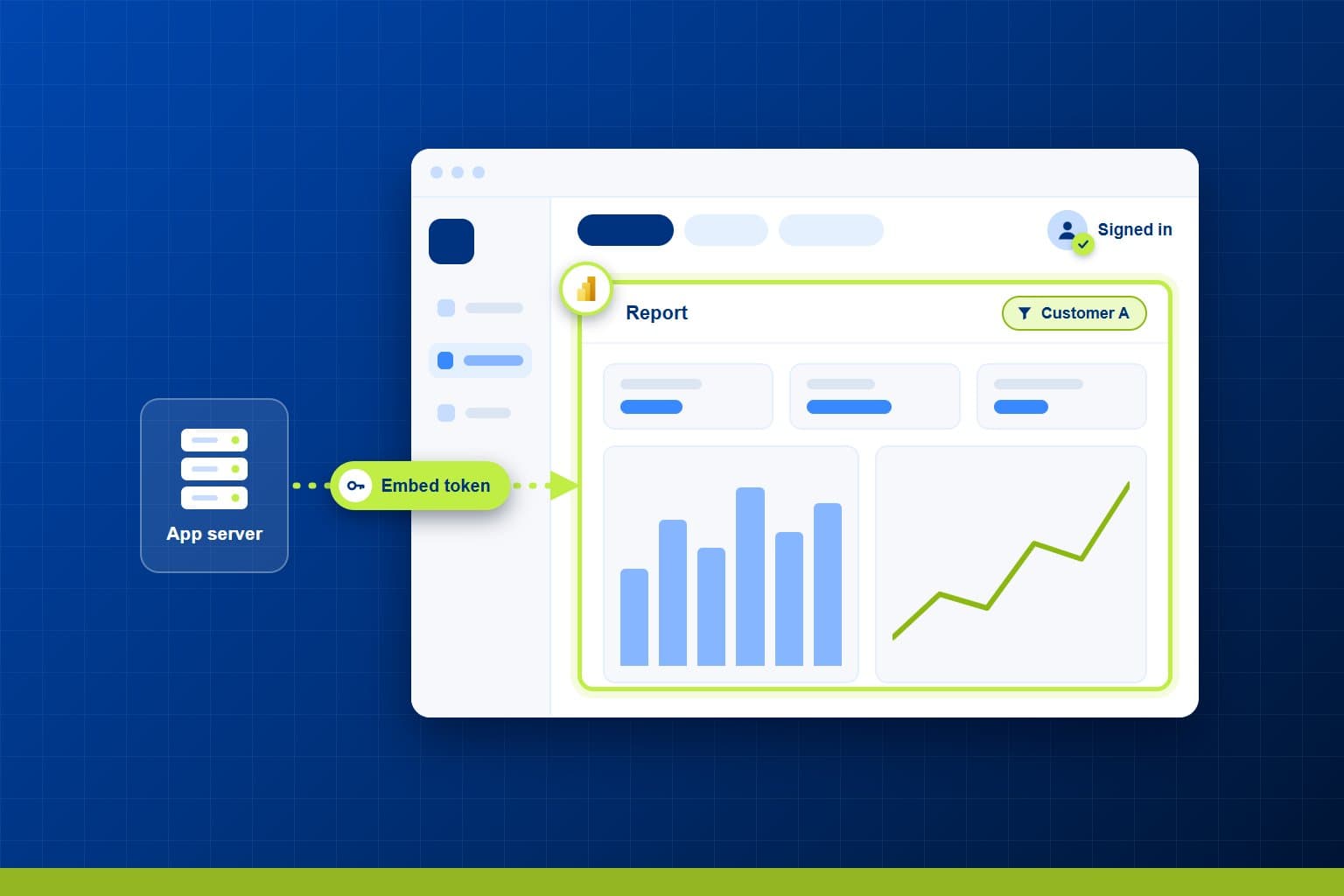
How PTR can give a software vendor's customers governed access to their own data, through a shared semantic model, a SQL endpoint or an API, without exposing the operational database.

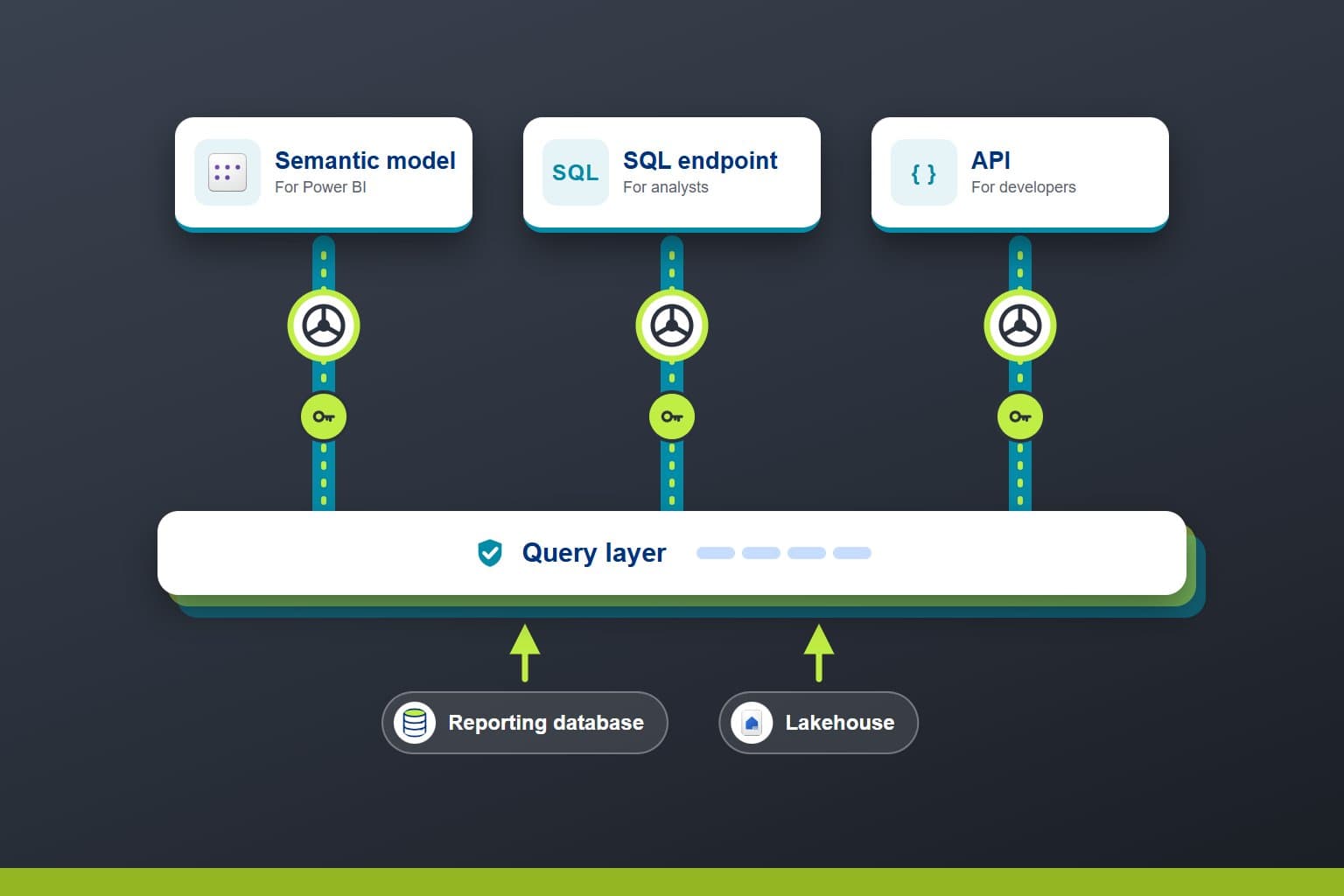
Once a software product has good reports, its larger customers start asking for the data behind them, to build their own analysis or load it into their own tools. PTR can give your customers governed access to their own data, through a shared semantic model, a SQL endpoint or a reporting API, without exposing your operational database.
The Challenge: customers who want data, not just reports
Standard reports answer the questions most customers share, but every customer also has questions of its own. When the only answer is an export or a custom report, the requests land on your support and development teams. Opening the operational database is not an option: its schema is built for the application, its naming means little outside it, and heavy queries compete with your users.
Teams need to be able to:
- Give customers data that matches the figures in your reports
- Let customers use Power BI or the tools they already have
- Control how much each customer can query, and how often
- Keep the application's schema and workload out of reach
What PTR can build: governed access to customer data
We can build a reporting access layer that offers each customer its own data in up to three ways. A shared semantic model gives customers a curated model, consistent with your own reports, to build visuals on or import into their own Power BI.
SQL access to the reporting database, or the SQL analytics endpoint of a Fabric lakehouse or warehouse, gives more granular data to customers who use other tools. A reporting endpoint added to your existing API serves customers who want the data inside their own systems.
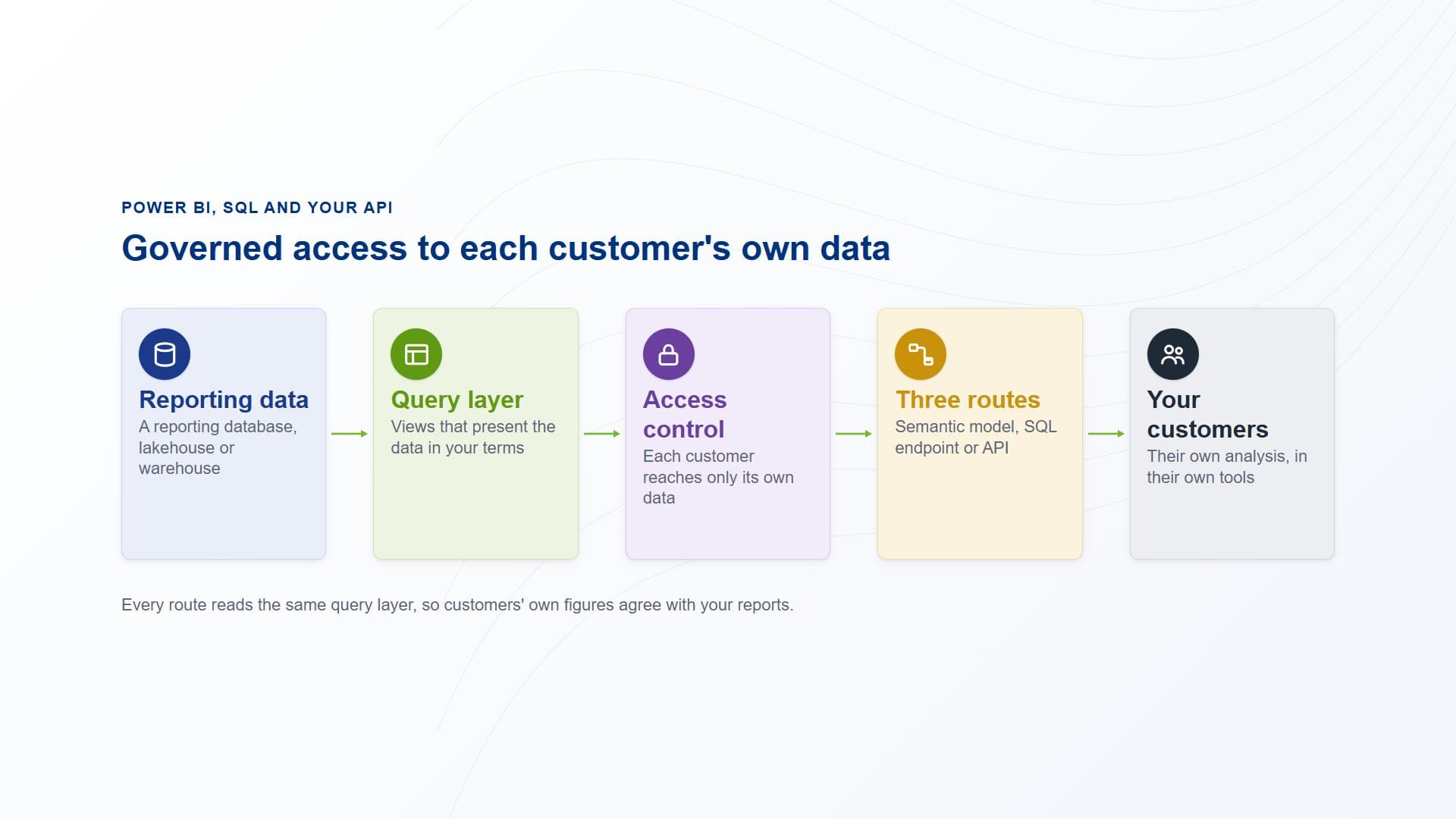
Your reporting data reaches each customer through a shared semantic model, a SQL endpoint or your API, each showing only that customer's data.
How PTR builds it: from query layer to delivery
A query layer over your data
We build views over the reporting data that hide the complexity of the schema and present it in terms your customers recognise. Every access route reads from this layer, so customers see the same figures whichever route they use.
The routes and the grain
We work with you to decide which routes each kind of customer gets and how granular the data should be. Aggregated data meets most needs; row-level detail is offered where customers need it and the load allows.
Access control on every route
We set up access control on each route, so each customer reaches only its own data, and secure the transfer of that data to them. SQL and API credentials are issued to each customer separately.
Limits that protect your resources
We can add throttling that protects your resources, so heavy use by one customer cannot slow your own reports or other customers' access.
What it gives your teams: data customers can use
- Data that matches your reports:every route reads the same query layer, so customers' own analysis agrees with your reports.
- A route for each kind of customer:Power BI users take the shared model, analysts take SQL, and developers call your API.
- Your schema kept private:customers query views built for them, never the application's own tables.
- Load kept in check:throttling protects your resources from any one customer's heavy use.
In practice, a customer who wants to build its own analysis is given access to its own data, rather than raising another request for a custom report.
Our view: customer data access should be designed as part of the product. A curated query layer, offered through routes you control, gives customers the data they ask for without handing them your database.
Give your customers their own data, on your terms
Stop answering every data request with an export or a custom report. Talk to us about building governed data access for your customers. PTR provides consultancy, training and support in Power BI, SQL and Microsoft Fabric.
Call 0118 979 4000 or Email info@ptr.co.uk.
Related Articles
Frequently Asked Questions
Couldn’t find the answer you were looking for? Feel free to reach out to us! Our team of experts is here to help.
Contact Us