Tech Tips
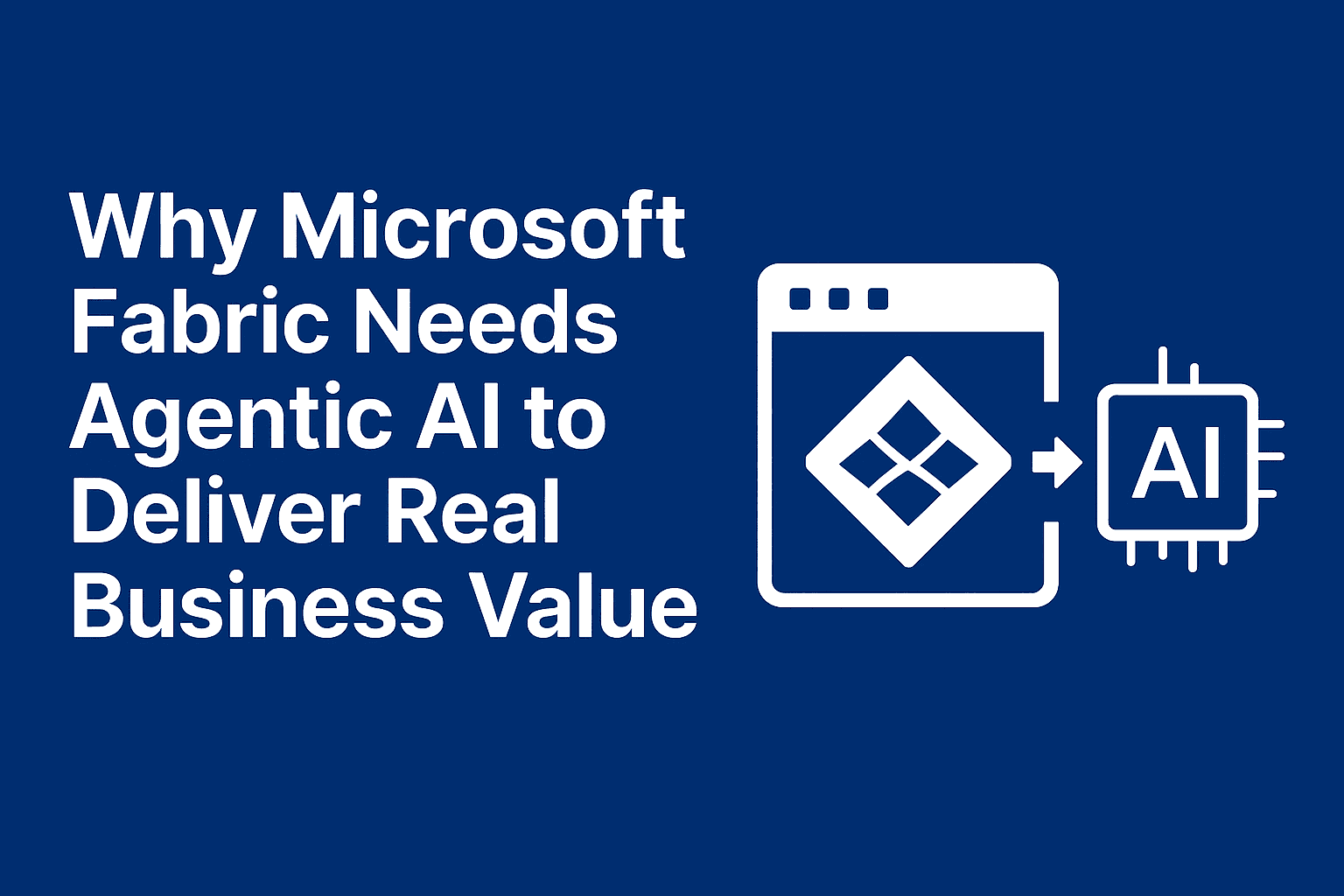
Why Microsoft Fabric Needs Agentic AI to Deliver Real Business Value
Most organisations don’t struggle to see problems in their data — they struggle to act on them fast enough.

Most businesses are not short of insight. They are short of momentum.
Dashboards can show where performance is slipping. Reports can reveal trends. Alerts can tell teams something needs attention. But in many organisations, the gap between knowing and doing is still far too wide.
That is where Agentic AI comes in. Instead of stopping at insight, it helps organisations move towards action, using intelligence that can interpret signals, decide what matters, and respond within clear business rules.
Why This Matters Now
Traditional BI has always been valuable, but it is fundamentally reactive. It tells you what happened and, at best, helps you work out why. In fast-moving environments, that is no longer enough. By the time someone has spotted the issue, analysed the cause, agreed the response, and carried it out, the cost of delay may already be growing.
Agentic AI changes the operating model. It does not just surface information for people to review later. It can help interpret context, recommend a course of action, and in the right scenarios trigger the next step automatically. That makes data more than something you consult. It becomes something that actively supports the business in real time.
Beyond Basic Automation
This is the point where many businesses understandably ask whether Agentic AI is simply another name for automation. It is not. Automation follows predefined paths. It works well when conditions are stable and exceptions are rare. Agentic AI is different because it is designed to work with goals, context, and changing conditions. Rather than only following a fixed sequence, it can reason through what should happen next and act within the limits you define.
What are the Business Gains
The real value lies in speed, consistency, and scale. A failed transaction can be identified and escalated before revenue is lost. A stock issue can be spotted early enough to avoid tying up cash unnecessarily. A compliance risk can be surfaced before it becomes an operational problem. In IT and data operations, issues can be detected and resolved faster, reducing disruption and freeing teams to focus on higher-value work.
Why Microsoft Fabric Is a Strong Foundation
Microsoft Fabric provides a practical foundation for this shift because it brings data, analytics, and AI together more closely. That makes it easier for organisations to work with trusted business data, connect intelligent workflows, and respond to live operational signals as events unfold. In practice, that means less distance between insight and action, and a more responsive way of running the business.
Autonomy Still Needs Guardrails
Of course, no business should pursue autonomous action without control. The strongest implementations are built on trusted data, clear permissions, defined workflows, and the option for human approval when the stakes are high. The goal is not to remove judgement. It is to reduce friction, improve response times, and make better use of human attention where it matters most.
The Shift from Insight to Action
The most important promise of Agentic AI is not that it sounds innovative. It is that it can help organisations act sooner, respond more consistently, and get more value from the data they already have. For businesses using Microsoft Fabric, that creates a compelling opportunity: moving from reporting on the past to responding in the present.
If you are exploring where Agentic AI could make the biggest difference in your business, a useful starting point is identifying the places where insight already exists but action still slows down. That is often where the strongest opportunities appear first.
How Can PTR Help?
For organisations exploring Agentic AI in Microsoft Fabric, PTR can help turn the idea into a practical, well-governed plan. Through its Fabric consultancy service and Fabric training, PTR supports clients with data discovery, platform strategy, solution design, implementation, migration from legacy or Azure-based analytics environments into Microsoft Fabric, and the skills needed to use the platform with confidence.
PTR’s approach is collaborative and hands-on, helping teams build the right foundation, define the right use cases, and move forward with confidence. Whether the goal is to modernise reporting, create a trusted data platform, or identify where intelligent automation can deliver real operational value, PTR can help businesses take the next step in a way that is practical, cost-effective, and aligned to their needs.
MD
Mandy Doward
Managing Director
PTR’s owner and Managing Director is a Microsoft certified Business Intelligence (BI) Consultant, with over 35 years of experience working with data analytics and BI.
Frequently Asked Questions
Couldn’t find the answer you were looking for? Feel free to reach out to us! Our team of experts is here to help.
Contact Us