
Machine Learning Model Development Consultancy Services
Which model is right for your problem
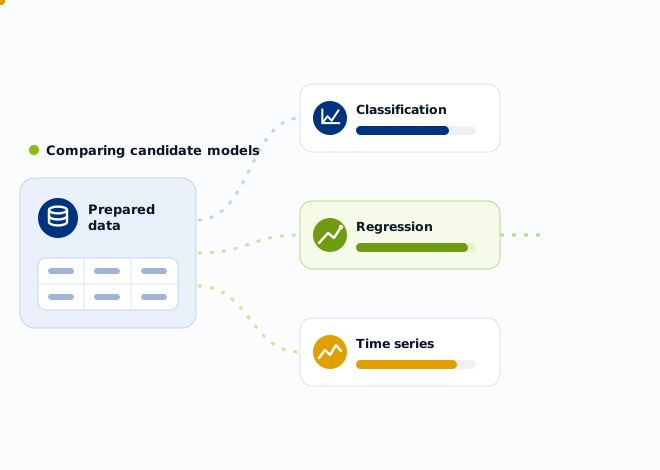
Once you know the signal is there, the question becomes which model to build. Rather than betting on a single algorithm, we test several against your data and pick the one that predicts most accurately and holds up in production.

From a proven idea to a working model
Machine learning is how a computer learns the patterns buried in your past data and uses them to make predictions about cases it has never seen, rather than following rules a person has written out by hand. Show it enough examples of what has happened before, which customers stayed, which orders were late, what demand looked like each season, and it works out the relationships for itself, then applies them to what comes next. Once you know your data holds a usable signal, building the model that does this is the next step. Proving that signal is there is the job of our ideation and experimentation stage; model development is what follows.
No single technique is best for every problem, so we do not bet on one. We try several against your data, measure how each performs, and put forward the one that predicts your outcome most accurately rather than the one that was easiest to reach for.
Which model is right for you?
Different kinds of model answer different kinds of question. The first task is to match the technique to what you are trying to do:
- Classification sorts information into categories, behind things like fraud detection, product categorisation and spotting defects.
- Regression predicts a number, such as forecasting sales, demand, customer lifetime value or how likely a customer is to leave.
- Time series handles data that changes over time, projecting trends and seasonal demand.
- Clustering groups similar customers, products or transactions, to support marketing campaigns and product strategy.
- Recommendation learns from past behaviour to suggest what someone is likely to want next.
- Anomaly detection learns what normal looks like, then flags the transactions or readings that do not fit.
Often the right answer draws on more than one of these, and part of the work is knowing which to try.




No single algorithm is best for every problem, so we test several and let the data choose.
Tailoring the model to your data
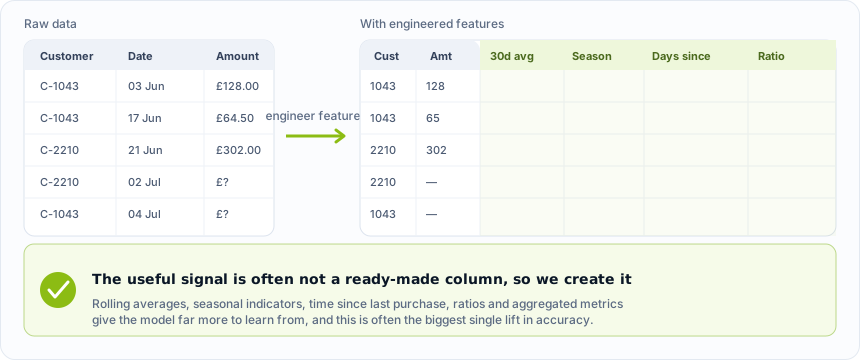
The algorithm is only half of what makes a model accurate. The other half is what you feed it, and the most useful information is often not sitting in your data as a ready-made column; it has to be created. From a plain table of transactions we can engineer new features that give the model far more to learn from, turning raw fields into signal: rolling averages that smooth out short-term noise, seasonal indicators that mark the time of year, the time since a customer last purchased, ratios and performance indicators, and aggregated business metrics.
This is frequently the single biggest lift in accuracy of the whole project, and because it draws on your underlying data it sits close to our data modelling and reporting work.
Building trust in the model
A model that looks good on the data it was trained on has proven nothing; it may just have memorised the answers. So we test it on data it has never seen and assess:
- How often it gets predictions wrong, and what kind of mistakes it makes
- Whether it is reliable enough to put into production
- Whether performance holds up across different datasets
- Whether it stays fair and stable over time
Knowing where a model is strong and where it is weak is what separates one you can rely on from one that merely looks convincing.
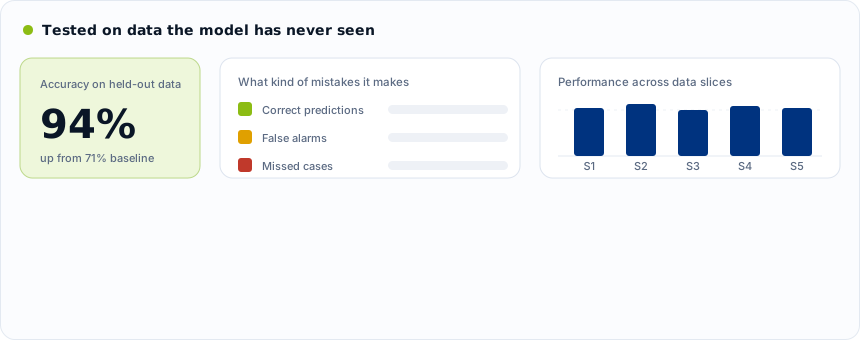
A model earns trust by performing on data it has never seen, not on the data it was trained on.
How can PTR help?
We make your data work for you, acting as the bridge between the business problem and the model that answers it. In practice we:
- Select the algorithms best suited to your problem
- Interpret the results in plain terms
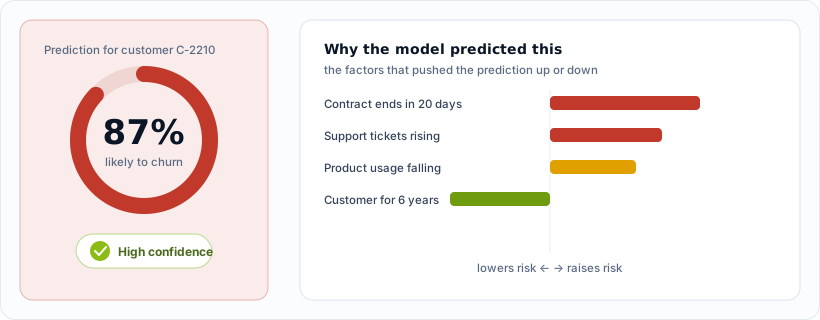
- Explain why each prediction was made
- Identify which factors influenced the outcome
- Show how confident the model is in each prediction
- Highlight the model's limitations and where it should not be relied on
That last part matters most. A model should never be a black box you are asked to trust on faith; it should be something a business can understand and build decisions on.
Where do you start?
Model development runs as a clear sequence, from framing the outcome you want to predict through to a tested model you can put to work and understand.
Frequently Asked Questions
Couldn’t find the answer you were looking for? Feel free to reach out to us! Our team of experts is here to help.
Contact Us