Model Operationalisation Consultancy Services
Put the model to work in your business
A model only creates value once its predictions reach the people and processes that act on them. Operationalisation is the work of deploying, monitoring and maintaining a model so it keeps delivering reliable results in production.

Insight only pays off once it is in use
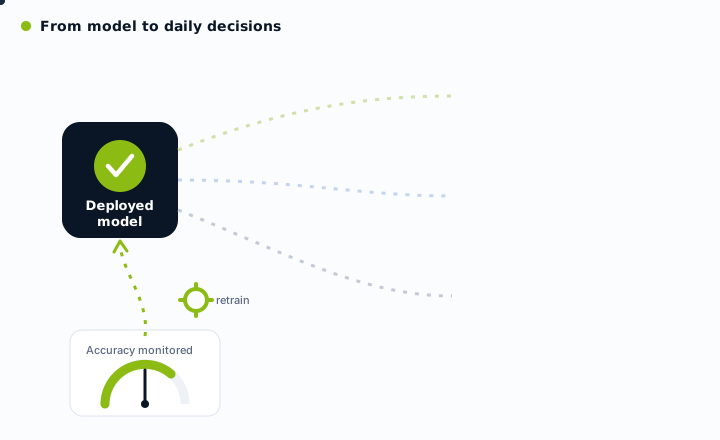
Building an accurate model is not the finish line. The real value from data science comes from embedding the results into your business processes, so that predictions and insights actually support the decisions people make every day rather than sitting in a notebook nobody opens.
Operationalisation is the stage that closes that gap. Once a model has been developed and shown to work, which is the job of our machine learning model development stage, this is where it is deployed into your systems, connected to the people and applications that need it, and kept accurate as the world it was trained on keeps changing.
What are you trying to achieve?
Teams usually arrive at this stage with a working model and a set of practical questions about putting it to use:
- How do we actually use the model?
- How do we get the predictions to the right people?
- How do we automate the process so it runs without manual effort?
- How often should the model be retrained?
- How do we manage new versions of a model?
- How do we know the model is still accurate?
These are questions of engineering and operations as much as data science, and answering them well is what turns a promising model into something a business can rely on day to day.
A model only earns its keep once its predictions reach the decision.
Deploying into production
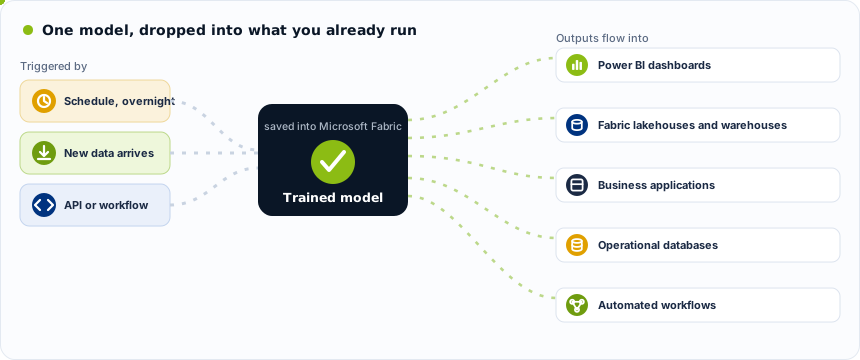
Once a model is ready, predictions can be generated in whatever way fits how your business already works:
- On a schedule, such as overnight processing
- As and when new data arrives
- As part of existing reporting pipelines
- Inside business applications
- Through APIs and automated workflows
Where you already run a data platform, deployment is largely a matter of fitting the model into it. Saving a model into Microsoft Fabric's machine learning capability gives it seamless integration with the rest of your Fabric resources, such as pipelines, lakehouses and warehouses, so a model can be dropped straight into processes you already have rather than bolted on beside them. If you have a data analytics or engineering platform in place, that existing investment is exactly what the model plugs into.
From there, model outputs can flow into the places where decisions are actually made:
- Power BI dashboards
- Microsoft Fabric lakehouses and warehouses
- Business applications
- Operational databases
- Automated workflows
Monitoring model performance
Trends change over time, and a model that was accurate at launch can quietly drift out of step with reality as customer habits move. That gradual decline is known as model drift, and monitoring is how you catch it early. There are two things worth watching in parallel:
Data and pipeline health
- Missing data
- Unexpected distributions
- Schema changes
- Pipeline failures
- Input validation issues
Accuracy signals
- Predictions compared against actual outcomes
- Performance metrics such as F1 score, mean absolute error and R squared
- Whether accuracy is trending down over time
Good monitoring gives you confidence that a model is still delivering reliable results long after it went live, rather than assuming it is because it once was. It is the difference between finding out a model has drifted from a dashboard and finding out from a decision that went wrong.
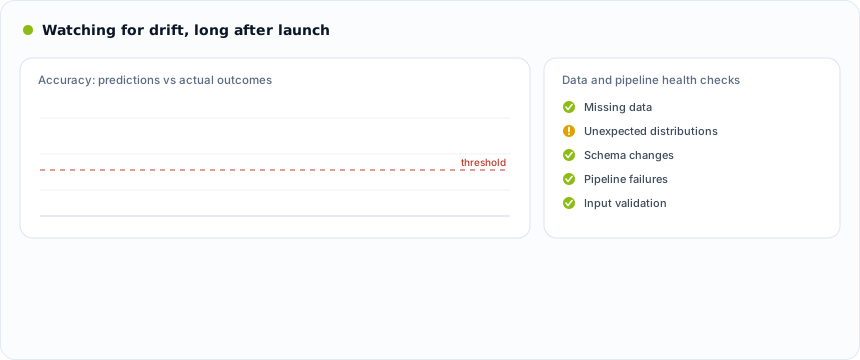
A model can decay quietly; monitoring is how you notice before a decision does.
Relevant data beats more data
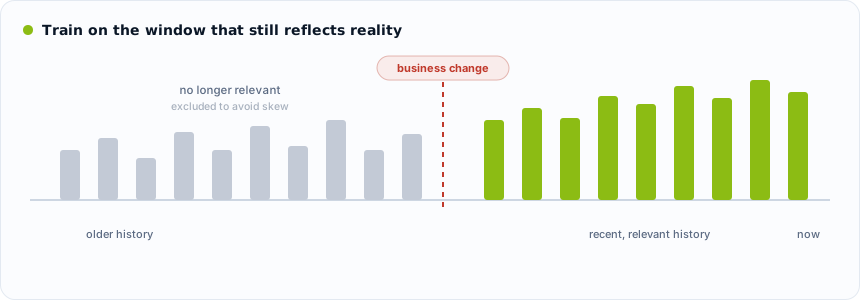
As a rule, more data is better for predictive analytics, because there is more history to learn from. But the slice of data you train on matters just as much as its size. A model trained straight across a business change can look accurate while quietly operating on outdated premises, learning patterns that no longer hold. Customer buying habits shift, pricing strategy changes, new products launch, processes are redesigned and economic conditions move, and each of these quietly redraws the very behaviour the model is trying to predict.
Including data from before a change like that can skew the results, because the model keeps learning behaviour that has since stopped being true. So the training window is a deliberate choice rather than simply as much history as you can find, and model outputs need regular review to confirm they are still producing actionable results.
Keeping the model accurate over time
Keeping a model accurate is an ongoing discipline, not a one-off task. The essentials are:
- Dashboards and alerts that track model accuracy, so a decline is flagged rather than discovered
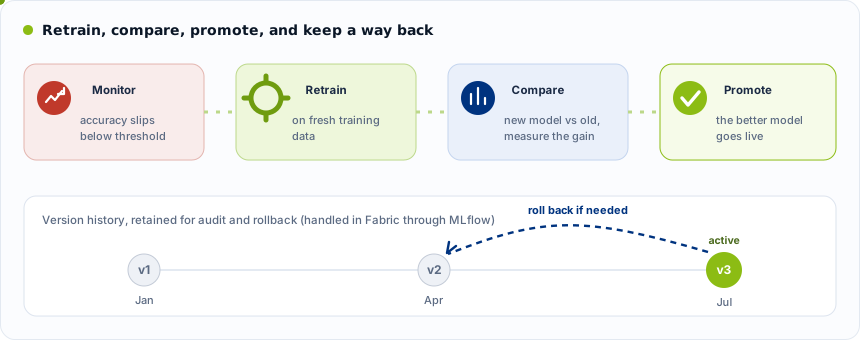
- Scheduled retraining on a fresh set of training data, comparing the new model against the old to measure the improvement before it goes live
- Retained historic versions, so every model is auditable and you can roll back to a previous version if needed
How often to retrain depends on your data. It might be weekly, monthly or quarterly, or only after a major business change, or simply whenever monitoring shows performance slipping. Keeping earlier versions of a model is what makes that safe, giving you a clear audit trail and a way back if a new version underperforms, which in a Fabric setup is handled through MLflow.
How can PTR help?
We handle the engineering that turns a working model into a dependable part of your operation, and we stay with it once it is live. In practice we:
- Deploy the model into your platform, whether scheduled, event-driven or served through an API
- Integrate its outputs into the dashboards, applications and databases your teams already use
- Fit the model into your existing Fabric pipelines, lakehouses and warehouses rather than building alongside them
- Set up monitoring and alerting so drift and data issues are caught early
- Schedule retraining and compare each new model against the last before it goes live
- Manage versioning and rollback so every model stays auditable
The aim is a model that keeps earning its keep, understood, monitored and maintained, not one that is deployed once and quietly left to decay.
Where do you start?
We frame operationalisation as a clear sequence, from the decision the model supports through to a deployed model that is monitored, retrained and safe to roll back.
Frequently Asked Questions
Couldn’t find the answer you were looking for? Feel free to reach out to us! Our team of experts is here to help.
Contact Us