
Data Integration Consultancy Services
Data Integration
Pull data out of every system you run, combine it, and keep it current, so your reports and models all draw on the same figures. The hard part is making scattered, mismatched sources agree, reliably and on schedule.

Moving data is the easy part
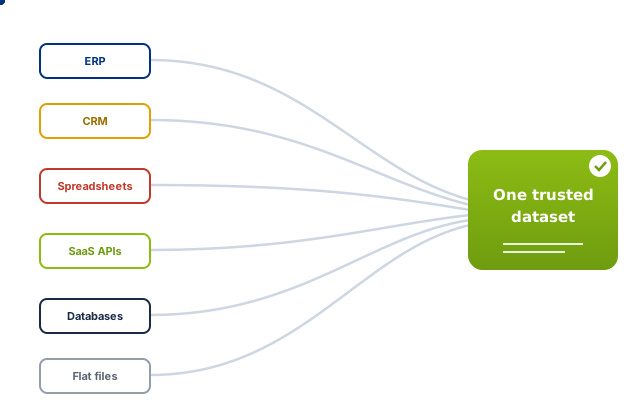
The first barrier to using your data is getting it out of all the systems, repositories and files where it sits to begin with. Your numbers live in an ERP, a CRM, a handful of SaaS tools, a few databases and an awful lot of spreadsheets, and each one speaks its own language. Pulling a copy out of any single source is rarely the hard bit. Modern tools can connect to almost anything.
The hard part is what happens next. The same customer is spelled three different ways across three systems, last month's figures arrive in a different shape to this month's, and two reports that should agree quietly disagree by a few percent. Real data integration is the work of making those sources reconcile, combine cleanly and stay current, so that everything downstream draws on the same trusted numbers. A pipeline that merely moves data is not the same as data you can trust.
When integration is done well it disappears. Reports refresh on their own, the figures agree wherever you look, and new questions can be answered from data that is already joined up rather than from another manual export. That quiet, dependable foundation is what every dashboard, model and AI project you build later stands on.
What are your challenges?
The symptoms are familiar. Data sits locked in separate systems that do not talk to each other, so answering a simple cross-system question means someone exporting from each one and stitching the results together by hand in a spreadsheet. That copy-and-paste work is slow, easy to get wrong, and has to be redone every time the question comes up again.
Worse, the figures often refuse to reconcile, because each system defines a customer, a product or a date in its own way, and nobody is sure which version is right. The data you do manage to bring together is frequently stale, refreshed overnight at best, when the decision in front of you needs today's position. And the pipelines that were built to fix all this have a habit of breaking silently, so the first sign of trouble is a number that looks wrong in a board report.

"If two reports disagree, people stop trusting both of them."
How can PTR help?
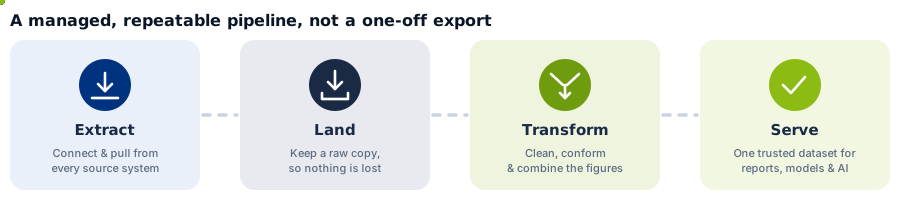
We treat integration as a managed, repeatable pipeline rather than a one-off export. Data is pulled from each source on a schedule, landed as a raw copy so nothing is ever lost, then cleaned, conformed and combined into one modelled dataset that downstream reports, models and AI all share. Because the steps run automatically and are monitored, the figures stay current and you find out the moment something fails rather than weeks later.
We start from the questions you need to answer and work back to the sources that hold the data, then design how each one is connected, how often it refreshes, and how conflicting definitions are reconciled into a single agreed version. The result is built on the platform you already use, so it fits your architecture rather than forcing a rebuild.
Where do you start?
Our typical engagement works from the questions you need to answer back to the sources that hold the data, so the pipeline we build is grounded in what the business actually needs.
Frequently Asked Questions
Couldn’t find the answer you were looking for? Feel free to reach out to us! Our team of experts is here to help.
Contact Us