
Training
How to use this year's training budget for courses in 2027
Training budget left before your year-end? Book any PTR course now, pay before your financial year closes and attend within six months. How it works, what to ask finance and how to time courses so the skills stick.

Published
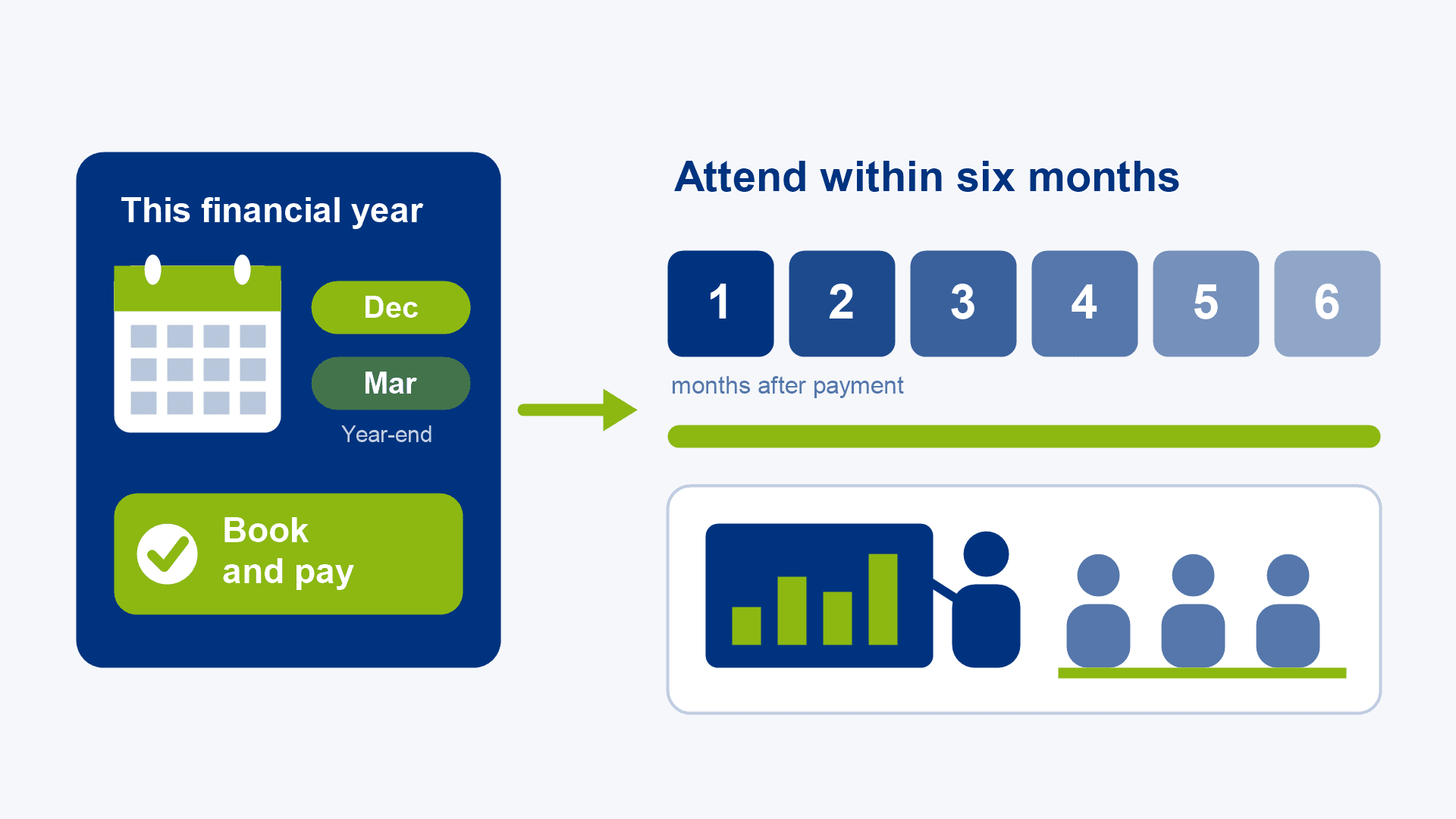
If you have training budget left before your financial year ends, you can book any PTR course now, pay before your year-end and attend within six months of paying. That works for December and March year-ends. Check first how your finance team treats a payment for training delivered next year, then book the people whose work changes first, timed for when that work starts.
It is late November and someone in finance has sent the email: any unspent budget needs to be committed before the year closes. There is money left on the training line, the team is busy with year-end work, and nobody wants to sit in a classroom the week before Christmas.
Think of it like buying theatre tickets for a spring show. You pay now, your seats are secured, and you go when the show is on. Booking training this way means this year's budget pays for the course and your people attend when it is most useful.
What does "use it or lose it" mean for a training budget?
In most organisations, training budget that is not spent or committed by the financial year-end goes back to the centre. It does not roll over, and an underspend can make next year's budget harder to defend. "Use it or lose it" is the pressure to spend before that deadline, which often leads to rushed bookings.
The deadline depends on your year-end. Many companies close their books on 31 December. The UK government's financial year, and with it much of the public sector, runs from 1 April to 31 March, and plenty of private companies use a March year-end too.
The rush is where money gets wasted. A course booked in a hurry for the second week of December is attended by whoever is free, not whoever needs it, and the skills arrive months before anyone uses them.
Budgets are tight enough to make the waste matter. The Department for Education's Employer Skills Survey 2024 found that UK employers spent £53.0bn on training, a 10.2% fall in real terms since 2022, or about £1,700 per employee.
Can you pay for training this year and attend next year?
Yes. Book any PTR course now, pay before your financial year-end, and attend at any point in the six months after you pay. The offer covers scheduled courses, closed courses for your own team and tailored courses. Contact us for dates and pricing.
This is how it works in practice:
- Choose the course, or tell us what your team needs and we will suggest one.
- We invoice now, so you can pay before your year-end.
- Your people attend within six months of payment, at the Wokingham training centre, in a virtual classroom or on your site.
Back to the theatre tickets. The value is in going to the show, not in holding the ticket, so book with a date range in mind that suits the people attending.
Which PTR courses can you book this way?
All of them. That includes scheduled courses, closed courses run for your team alone, and tailored courses shaped around your own reports, data and scenarios. One-to-one sessions can also be arranged.
The course range covers:
- Power BI and Microsoft Fabric, from first reports through to data engineering, lakehouse design and Fabric administration
- SQL Server, Excel and VBA, and Python
- Azure, Power Platform, and AI and Copilot
- Data science, Oracle, Linux and Unix, networking and security, and C++
If several people need the same skills, a closed course usually makes the most sense. The group learns together around its own business scenarios, and you can avoid having the whole team away for more than a day at a time.
Will your finance team accept a prepayment for training?
Usually, but check first. How a payment for training delivered next year is treated depends on your organisation's rules. Some budgets count the money when the invoice is paid. Under accruals accounting, finance may record it as a prepayment and charge the cost when the course runs. Public bodies often have rules on paying in advance.
Three questions to ask your finance team before you book:
- Does a payment made this year for training next year come out of this year's training budget?
- Do you need a purchase order raised before the year-end, or a paid invoice?
- Are there rules on paying suppliers in advance, and is a six-month attendance window acceptable?
If the answer is yes, book. If finance needs a particular invoice date or wording, tell us when you book and we will work to it.
Why book instructor-led courses rather than videos or AI chat?
Because skills fade without use, and learning sticks when someone practises with an expert who can see what they are doing. A trainer answers the follow-up question, corrects a habit before it reaches your reports and explains the question you did not know to ask. Videos and AI chat answer only what you think to type.
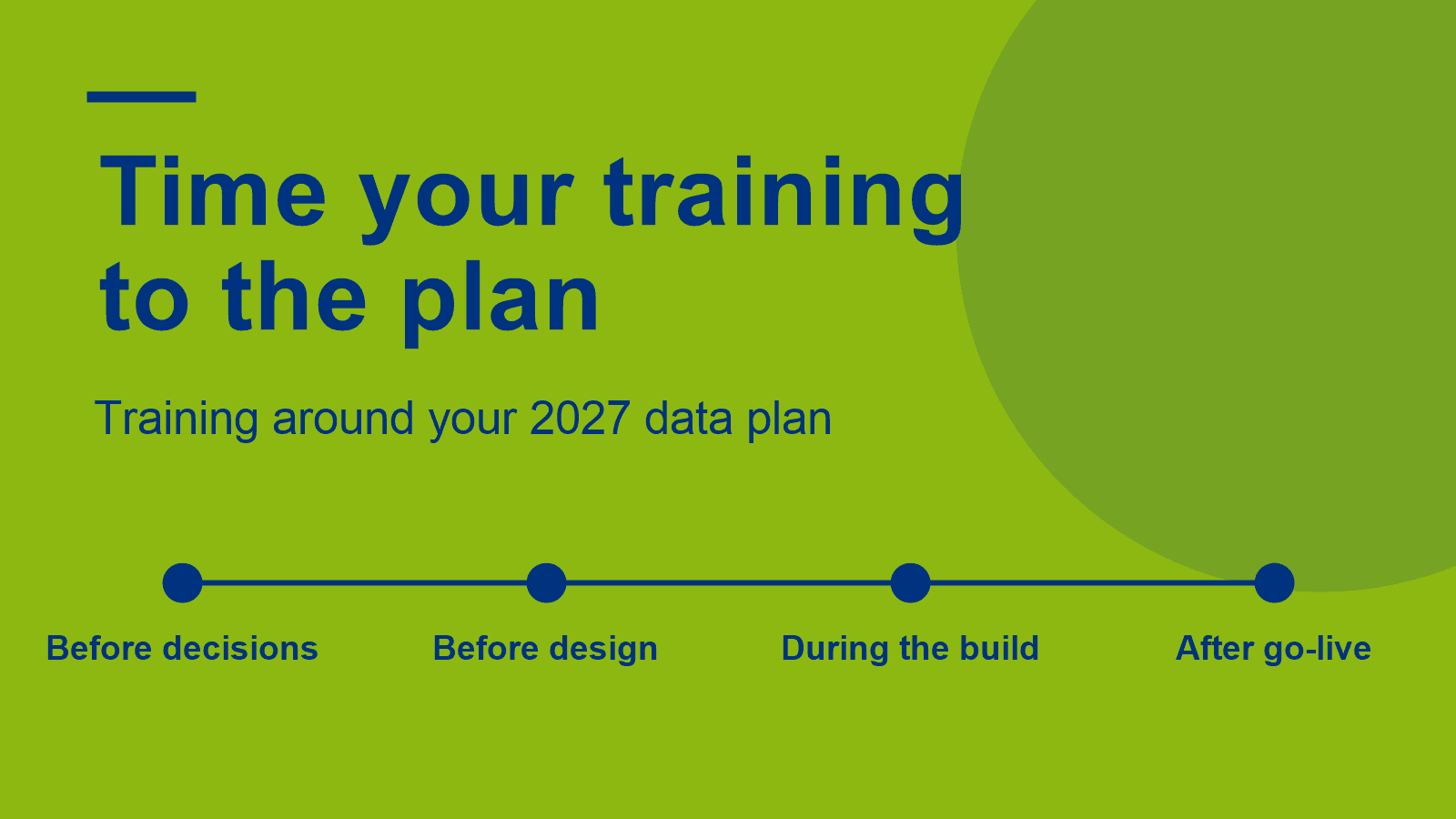
"Use it or lose it" applies to skills as well as budgets. Someone who learns DAX in December and waits until April to build a model will have to relearn much of it. Paying now and attending later solves both problems: the budget is used, and the course is timed so people use the skill straight away.
Self-paced material still has a place, for reference and refreshers after a course. What it cannot do is watch someone work through a lab, notice they are building a measure the slow way and show them a better one.
When you compare providers, ask whether the trainer also builds solutions in the technology they teach. Our trainers work alongside PTR consultants who design and build Microsoft Fabric and Power BI solutions for clients, so courses reflect what works on real projects.
How do the options for leftover training budget compare?
Option | What you get | What to watch |
Book a PTR course now, attend within six months | Instructor-led course timed to when the work starts | Check how finance treats the prepayment |
Rush a course into December | Budget spent this year | Whoever is free attends; skills fade before use |
Buy an e-learning licence | Content available all year | Completion depends on people finding the time |
Let the budget lapse | Nothing | The gap stays, and next year's budget may shrink |
Who should you book first?
Book the people whose work changes first in 2027: the team starting a new data platform or reporting project, the analysts who will take over reports when it goes live, and the leaders who will sign off the design. Time each course for just before that person needs the skill.
Our earlier article on which data skills your team needs for 2027 sets out the skills by role, and Capability isn't confidence explains why Fabric projects depend on people being trained when the platform arrives.
If your organisation also has data or IT budget with the same deadline, our companion article explains how to use this year's budget for a data discovery or AI readiness assessment [ADD LINK: consultancy blog] on the same pay-now terms.
What should you do before your year-end?
To summarise: budget left at the year-end usually goes back, and skills learned months before they are used fade. Booking now and attending within six months keeps both.
Next steps:
- Ask finance the three questions above this week.
- List the people whose work changes first in 2027 and when that work starts.
- Contact PTR for course options, dates and pricing, or to shape a closed course for your team.
- Pay before your year-end, then agree attendance dates within the six months.
MD
Mandy Doward
Managing Director
PTR’s owner and Managing Director is a Microsoft certified Business Intelligence (BI) Consultant, with over 35 years of experience working with data analytics and BI.
Frequently Asked Questions
Couldn’t find the answer you were looking for? Feel free to reach out to us! Our team of experts is here to help.
Contact Us