Training
Which data skills does your team need for 2027?
Gartner and BARC both point to culture and literacy as data priorities for 2027. How closed and tailored instructor-led training helps your team with data quality, governance, culture and shared definitions.

Published

Quick answer: Four data skills matter most for 2027: checking quality and security, following shared rules for data and AI, working together on the same figures, and agreeing what business terms mean. Instructor-led closed or tailored training builds them, using your own data where that helps, with an instructor to answer questions as they come up.
Picture a team handed a new set of AI tools and a library of training videos. Each person finds a route to an answer. One builds a report that looks right. Another asks an AI tool for a query and pastes it in. Three weeks later two reports show different totals for the same customer, and nobody can say which is right.
A recipe book is a good guide to a dish. A chef working in your kitchen knows what is in your cupboards and who is coming to dinner. Videos and AI tools are the recipe book. An instructor working on your data is the chef.
Why do data priorities for 2027 depend on people as well as tools?
Because the research behind the 2027 priorities keeps coming back to people. Gartner reports that cultural resistance is cited more often than funding when data governance struggles, and BARC’s 2026 trend survey puts data and AI literacy in its top five of 20 trends. Software helps, but trained people decide whether it is used well.
Gartner’s March 2026 survey of data and analytics leaders found that 60% cited cultural resistance as a key reason their governance programmes struggle, while 40% pointed to funding constraints. Gartner links this to a prediction that by 2027, 60% of organisations that fail to address these cultural challenges will fail to govern AI successfully.
BARC’s Data, BI and Analytics Trend Monitor 2026 asked 1,579 professionals to rate 20 trends. Data quality management came first, followed by data security and privacy, and then data-driven culture, data and AI governance, and data and AI literacy.
Our companion article, "Your 2027 AI plan depends on data you may not trust yet", sets out four data priorities for 2027. This article looks at the skills behind each one.
What can an instructor do that videos and AI tools cannot?
An instructor can see your data, your deadlines and your team, and tell you whether an answer fits. A video gives one route to one answer, and an AI tool gives a fluent one, but neither knows your systems or checks the result. An instructor can answer questions as they arise and notice when someone is heading for trouble.
Videos and AI tools are good at getting someone an answer this week. The person who built the answer is also the least likely to spot a problem with it. On a closed or tailored course the instructor can be briefed on your systems, your data and your project plan, and the team works through real examples with someone beside them. The team also leaves able to judge what a video or an AI tool produces, which matters more the more they use them. A chef notices that your oven runs hot. A recipe book can’t.
How does training support the four data priorities for 2027?
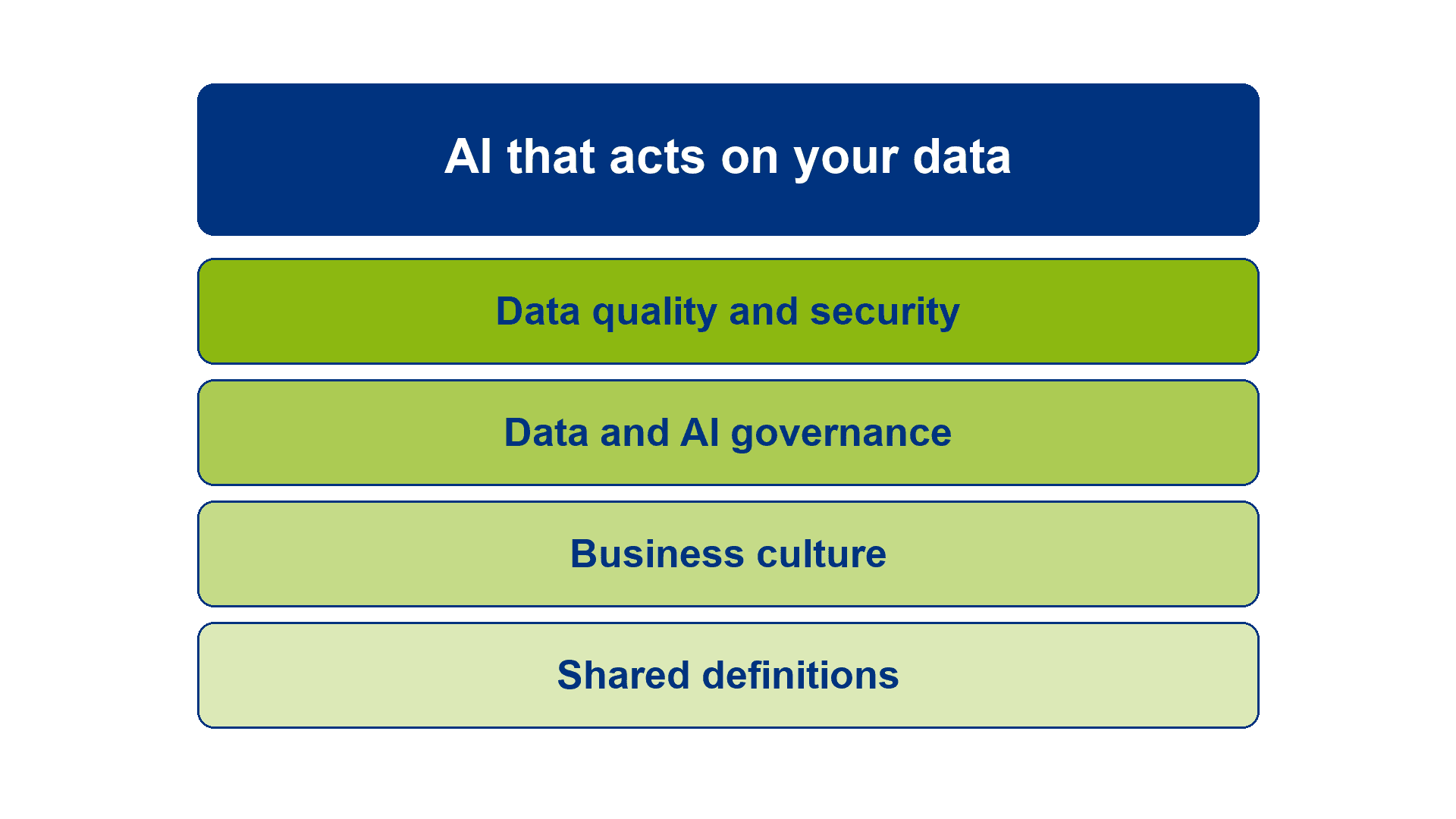
Each of the four priorities has a skill behind it, and a closed or tailored course can teach that skill, using your own data where that helps. Data quality and security need practice. Governance needs shared understanding. Culture needs people learning together. Shared definitions need an agreed vocabulary, worked out on your own reports.
Data quality and security
BARC puts data quality management first and data security and privacy second, both rated 7.9 out of 10. An AI tool that can reach poor data, or sensitive data, will act on whatever it finds. People need to be able to spot both before that happens.
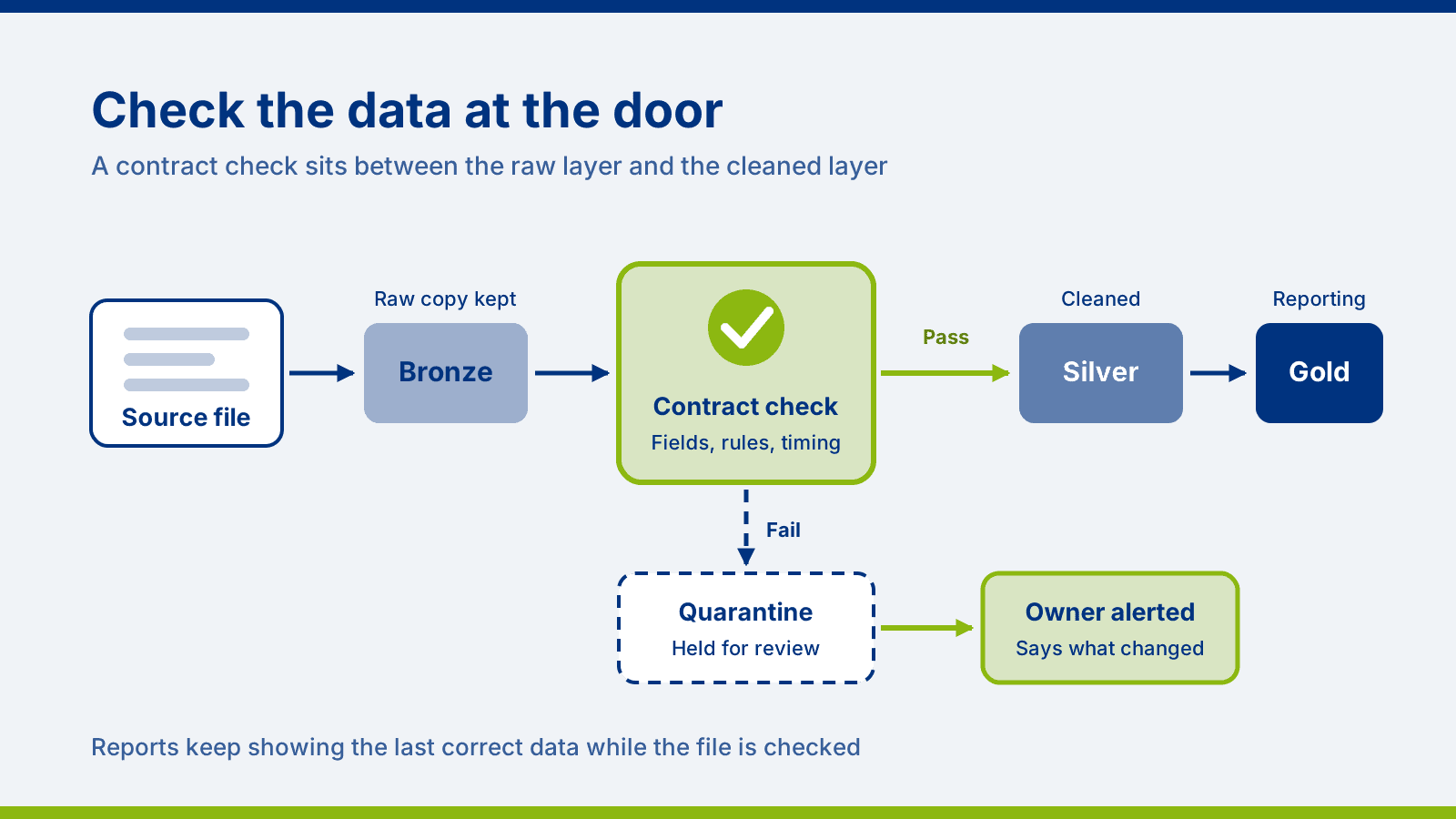
On a course whose labs use your own data, the team practises profiling, cleaning and securing it with an instructor to ask. PTR’s Microsoft Fabric courses cover pipelines, data warehousing, semantic models and report development. Ask your team: would you trust your data enough to let AI act on it?
Governing data and AI together
Rules only work when the people who apply them understand them. A tailored session can cover your own rules and the tools your team uses, so the people who follow the rules learn them together and ask questions at the time. Ask your team: who owns the rules for how AI uses your data?
Culture, not just tools
When a team learns together, colleagues help each other see where the material applies and talk through how to improve their own work. That is harder to arrange when each person is on a different course or watching a different video. Governance tends to stall when the business sees it as an IT job, and a shared course is a low-risk place to change that view. Ask your team: do your business teams see governance as theirs, or as IT’s job?
Shared definitions
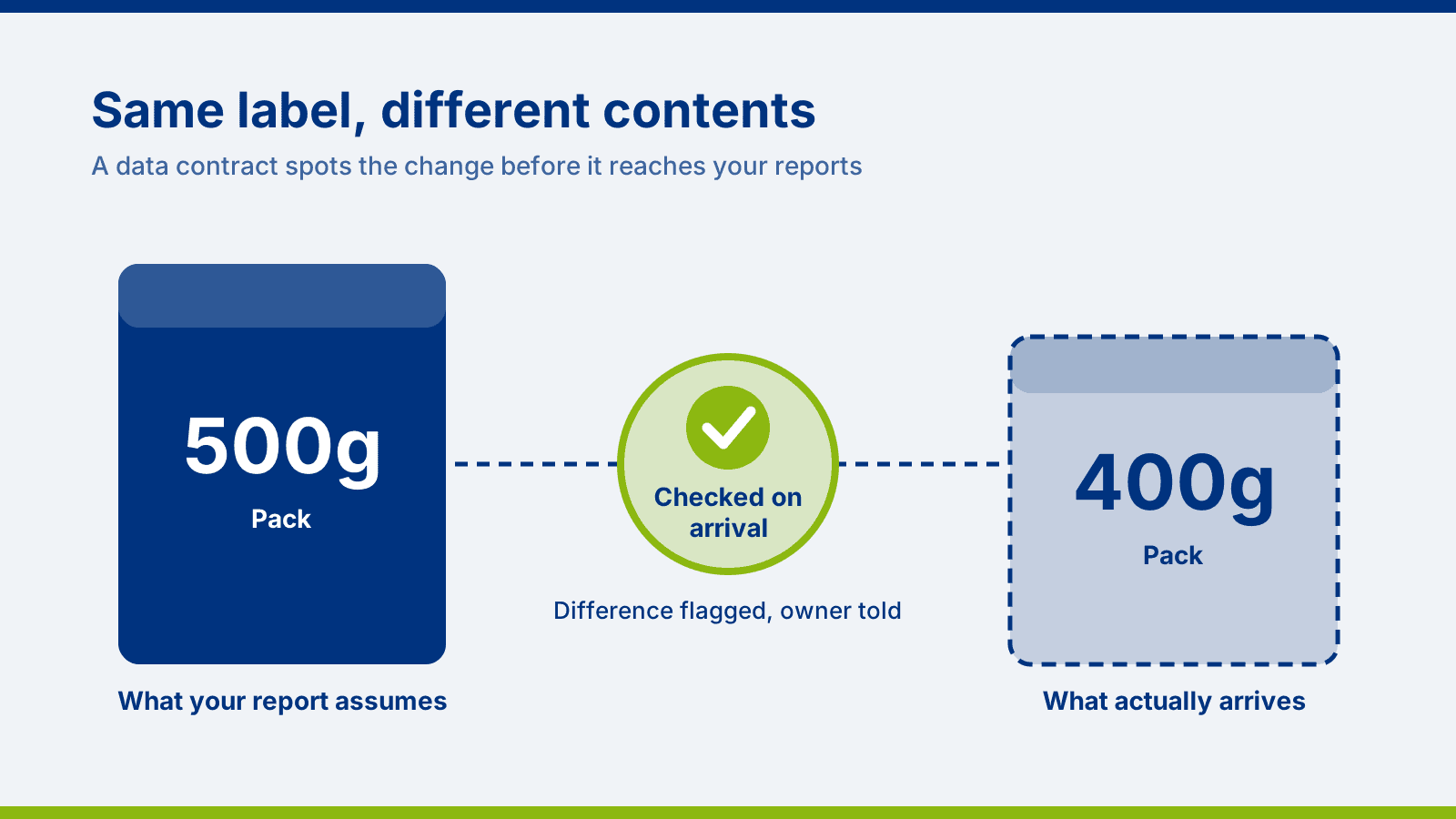
A course that uses your own reports where it can gives the team a reason to settle what its key terms mean while it is learning the tool, with an instructor to hold the discussion. Ask your team: if Finance and an AI tool both answer "what is a customer?", do they agree?
What is the difference between closed, tailored and bespoke training?
A closed course is run just for your group. A tailored course trims or expands the syllabus to fit your needs. A bespoke course is built around your own infrastructure, applications and data. Any of them can run at your premises, at PTR’s training centre in Wokingham or online.
With a closed course the focus stays on your team and its real business scenarios, and the time and place can be arranged to suit you. Tailoring means nobody sits through what they already know. Labs for closed and tailored courses can be based on your own data where that is desirable, and bespoke training goes furthest, because the examples and exercises come from your own systems.
How can a team train without losing weeks of work?
Closed courses can run as short sprints, so the team is out of action for no more than one day at a time, and the time and place can be arranged to suit you. PTR also runs courses at your premises across the UK and most of Europe, at its training centre in Wokingham, and as virtual classes with hands-on labs in small breakout groups.
The closed-courses page also lists bitesize upskilling workshops, user groups and clinics, timed around your project plan to support adoption. Virtual sessions use short bursts of knowledge transfer followed by questions and labs, and delegates can ask the instructor for help much as they would in a classroom. After an onsite course, a follow-up visit can deal with questions specific to each role. Where one person needs to learn quickly, one-to-one tuition can be more cost effective and of more personal benefit.
How does training fit a Microsoft Fabric project?
Training runs best alongside the build, so the people who will use Microsoft Fabric learn on the platform they will work with afterwards, using your own data where that helps. PTR teaches Fabric, covering pipelines, data warehousing, semantic models and report development, and also provides consultancy in Azure, Power BI and Microsoft Fabric, so the two can be planned together.
Fabric is the core of how we deliver data solutions, and the training follows from that. Our Fabric training pathway describes five steps (brief, educate, train, mentor and nurture) and focuses on user adoption, data literacy and design quality. Leaders and all staff get short briefings, report users, report creators and engineers get role-based courses, and sessions can be recorded so new starters catch up at their own pace.
How do you choose a provider for team data training?
Ask who writes the content and whether they can change it, whether labs can use your data, where the training can be delivered, and what happens afterwards. A provider that writes its own material is better placed to adapt it to your team.
- Who designs the content, and can it be changed for our team?
- Can labs use our own data and reports?
- Can the course run at our premises, online or in short sprints?
- What help is there once the course has finished?
PTR is a vendor independent training provider with over 35 years of technical training experience, produces a lot of its own material, and is a Microsoft Solutions Partner for Azure and for Data and AI.
How does PTR set up a tailored course?
It starts with a conversation. PTR talks to you and your colleagues about your business, works with you to identify the key areas of interest, recommends a proposed training plan, then works with you to fine-tune the content. No two businesses are alike, so a single fixed course will not work for every one.
We recommend eight delegates for closed and tailored courses and four for workshops. Presentation or chalk-and-talk events can be larger, and numbers are negotiable.
If you tell us which of the four priorities is on your mind, we will suggest where a closed or tailored course could start. Contact PTR for dates and pricing on 0118 979 4000 or at ptr.co.uk/contact.
Frequently asked questions
What is a closed training course?
A closed course is run just for your group, so the focus stays on your team. It can be arranged at a time and place to suit you.
How many people can attend a closed course?
We recommend eight delegates for closed and tailored courses and four for workshops. Numbers for presentation or chalk-and-talk events are negotiable.
Can training use our own data?
Yes, where that is desirable. Labs for closed and tailored courses can be based on your own data, and bespoke courses are built around your own infrastructure, applications and data.
Can you train my team at our offices?
Yes. Courses can be delivered at your premises or a location of your choice, anywhere in the UK and most of Europe, at PTR’s training centre in Wokingham, or virtually.
Do you teach Microsoft Fabric?
Yes. PTR offers Fabric courses covering pipelines, data warehousing, semantic models and report development.
MD
Mandy Doward
Managing Director
PTR’s owner and Managing Director is a Microsoft certified Business Intelligence (BI) Consultant, with over 35 years of experience working with data analytics and BI.
Frequently Asked Questions
Couldn’t find the answer you were looking for? Feel free to reach out to us! Our team of experts is here to help.
Contact Us