What Is Microsoft Fabric? Consultancy Services
Say hello to Microsoft Fabric - a unified data analytics platform for the AI era
Everyday, businesses like yours are using data to get ahead of the competition. Now, we need to continue that digital journey incorporating the transformative advantages that AI has to offer.

A Unified Data Analytics Platform for the AI Era
Microsoft Fabric Overview
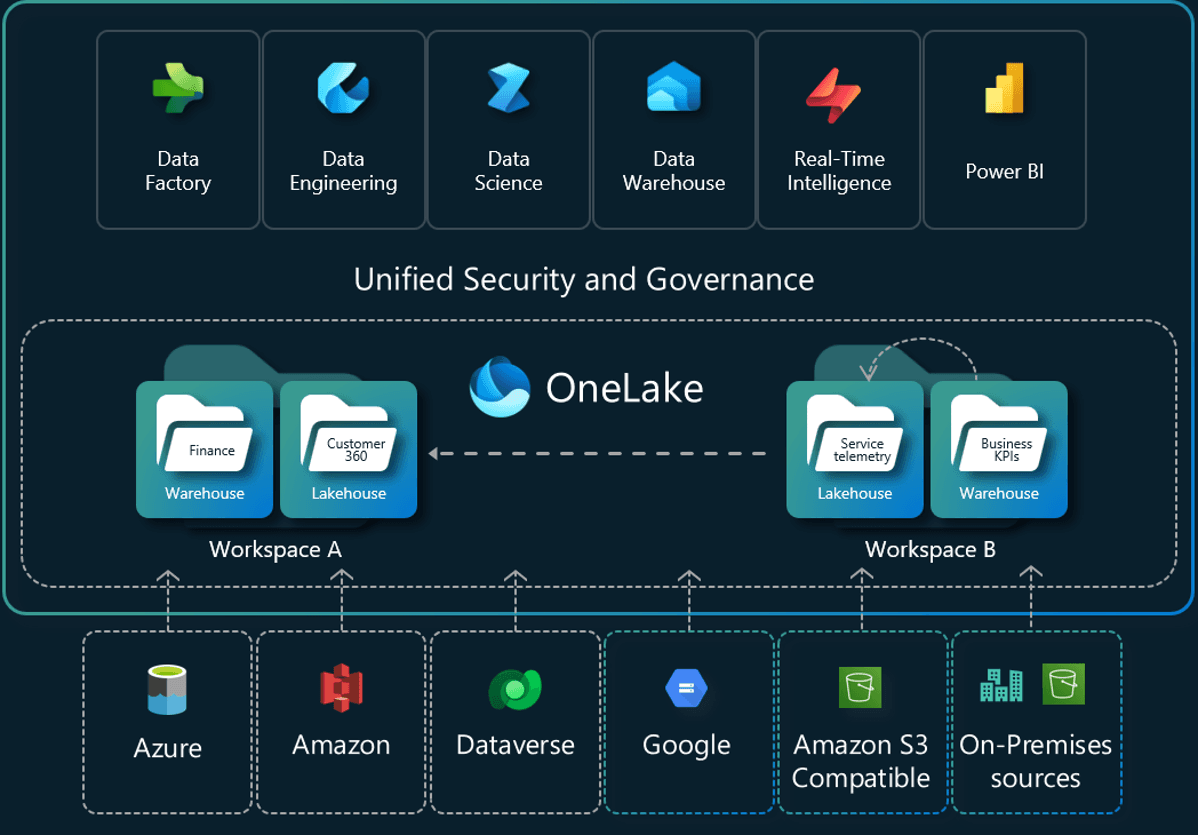
What Makes Fabric different?
Microsoft Fabric Core Features
- Data Factory: Streamlines data integration by providing over 150 native connectors. It allows teams to build complex multi-step data pipelines and no-code Dataflows (Gen2) to ingest and transform data from any source.
- Data Engineering: Designed for big data processing, this workload empowers data engineers to manage, clean, and scale massive datasets using high-performance Apache Spark environments and customizable, collaboration-ready Python notebooks.
- Data Lakehouse: The foundational data store within Fabric. It combines the clean structure of a traditional data warehouse with the massive, cost-effective storage capacity of a data lake. It allows data engineers to store raw files alongside structured tables using the open-source Delta Parquet format, making data instantly accessible to Spark, SQL, and Power BI.
- Data Warehouse: Delivers an enterprise-grade relational database experience. It separates compute from storage, allowing separate teams to scale performance independently while natively storing data in the open-source Delta Parquet format.
- Data Science: Provides an end-to-end workflow for data scientists to build, train, and deploy advanced machine learning models. It integrates natively with MLflow to track experiments and seamlessly scores data directly inside your lakehouse.
- Real-Time Intelligence: Optimized for event-driven data, this workload handles high-velocity, high-volume streaming data from IoT devices, system logs, and telemetry. It enables instantaneous analysis and real-time visual dashboarding.
- Power BI: The industry-leading business intelligence tool is deeply woven into Fabric. Utilising the innovative "Direct Lake" mode, Power BI charts can query multi-terabyte datasets sitting inside OneLake instantly - completely bypassing the need to import or refresh data.
- Data Activator: Serves as the automated "digital nervous system" of your data platform. It continuously monitors your streaming data and Power BI reports to trigger immediate alerts, automate workflows, and launch operational processes the moment specific data thresholds are met.
- Microsoft Purview Data Governance: Operating as a native, foundational layer across all Fabric experiences, this workload ensures your information asset catalogue remains secure. It automates sensitive data discovery, enforces data loss prevention (DLP) policies, and tracks comprehensive data lineage from ingestion to dashboard.
- Fabric Databases: (including native Fabric SQL Database and Cosmos DB integration) to handle operational, transactional workloads (OLTP). These are built on the SQL Server engine and natively mirror their data directly into OneLake in real time without any ETL configuration.
- Mirroring: Instead of building complex Data Factory pipelines to constantly copy data from external databases, Mirroring creates a live, read-only replication link. It continuously syncs data from external systems—like Snowflake, Azure SQL, Azure Cosmos DB, and MongoDB—directly into Fabric’s OneLake as Delta Parquet files with zero management overhead.
- API for GraphQL: A developer-focused data access layer built into Fabric. It allows applications and frontend developers to query data stored across various Fabric Lakehouses and Warehouses using a single, secure, high-performance GraphQL endpoint, completely abstracting away complex backend SQL or Spark connections.
- Fabric Extensibility & Custom Workloads: Fabric is no longer a closed Microsoft-only ecosystem. Third-party software vendors (ISVs) and internal enterprise development teams can build, deploy, and govern custom applications and independent workloads directly inside the Fabric user interface and workspace infrastructure.
One-Lake – the One-Drive for data
Powered up by AI
Insights for everyone
- Microsoft Excel users: discover and analyse data in OneLake, generate a Power BI report - all with a click of a button.
- Teams users: bring data into everyday work with embedded channels, chat, and meeting experiences.
- Business users: infuse presentations with embedded live Power BI reports directly in Microsoft PowerPoint.
Exceptional value and reduced costs
Where does Fabric fit in?
How can PTR Help?
Share This Page
Articles you may be interested in
Data Warehouse or Medallion Architecture Lakehouse? What on Earth do I Choose When Moving into Microsoft Fabric?!
Microsoft Fabric doesn't retire the Data Warehouse, it makes the Medallion Architecture Lakehouse a genuine alternative. The right choice depends on where you're starting from, not which option is newer.
Will Doward-Jones
Cool New Things in Microsoft Fabric
But what are the really cool new things in Fabric that could dramatically change things for your business or organisation?
Mandy Doward
Fabric Case Study - Delivering modern, future-proof reporting with Fabric
Our client wanted to establish a single, centralised, enterprise-level reporting environment that supported reliable insight and consistent decision making.
Mandy Doward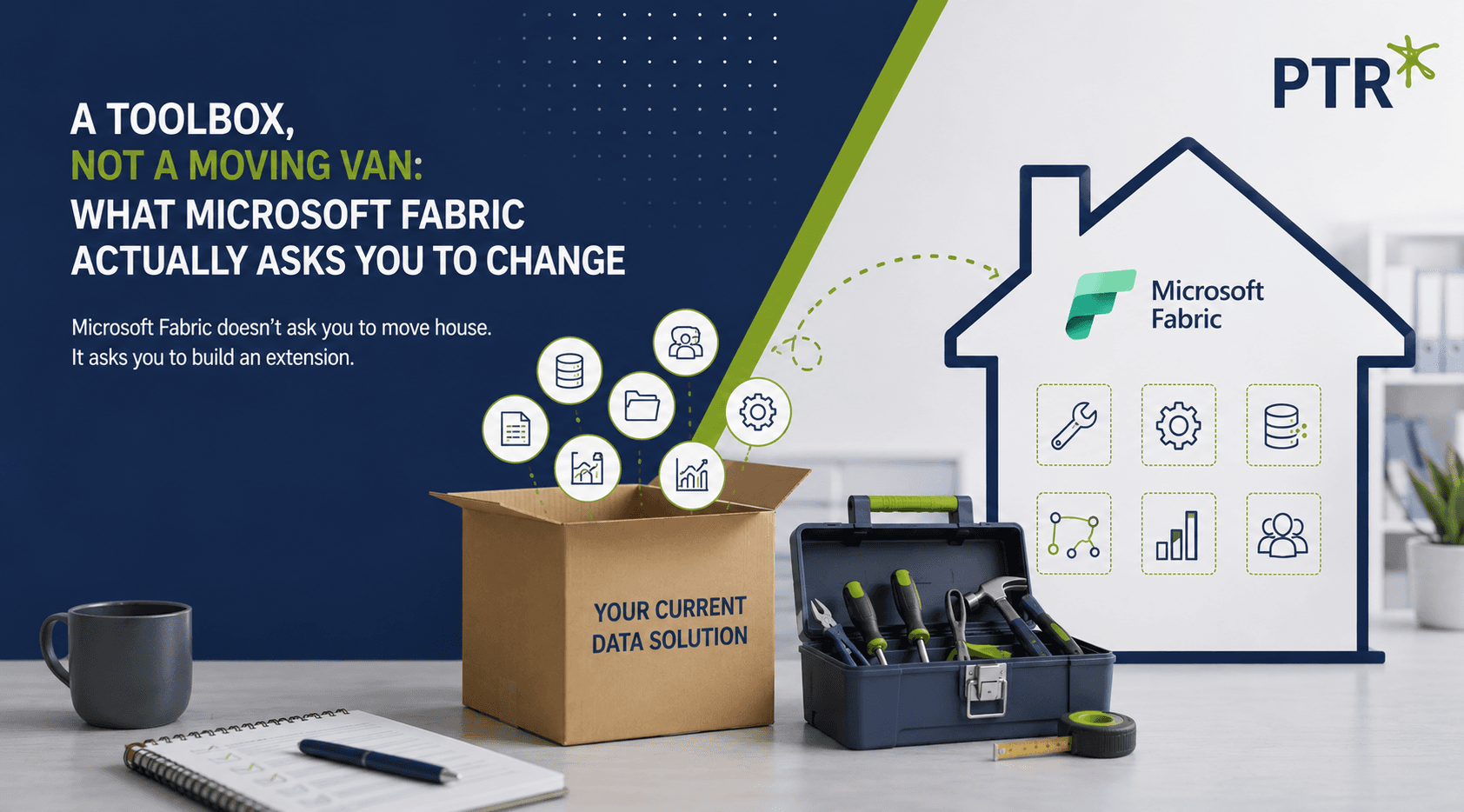
A Toolbox, not a Moving Van: What Microsoft Fabric Actually Asks You to Change
Microsoft Fabric doesn't ask you to move house, it asks you to build an extension.
Mandy Doward
Frequently Asked Questions
Couldn’t find the answer you were looking for? Feel free to reach out to us! Our team of experts is here to help.
Contact Us