
Microsoft Fabric
Materialized Lake Views in Microsoft Fabric Explained
Materialized lake views let Microsoft Fabric clean, join and refresh your data from simple SQL queries, with built-in quality rules and monitoring. Here is what they do, where they fall short and how to start with one report.

Published
A report goes out with last week's figures because an overnight data job failed and nobody noticed. Nothing was wrong with the business. The problem was a fragile chain of hand-built steps, each one waiting on the last, with no one watching the whole chain.
Materialized lake views are Microsoft Fabric's answer. They let you describe how data should be cleaned and shaped, then leave Fabric to run it in the right order and tell you when something breaks. This article explains what they are, what they are good for, and where they are not the right tool.
What is a materialized lake view in Microsoft Fabric?
A materialized lake view is a saved SQL query whose results Fabric stores as a table and keeps up to date for you. You write one query that describes the transformation you want, such as removing duplicates or joining orders to customers. Fabric runs it, stores the result and refreshes it when the source data changes.
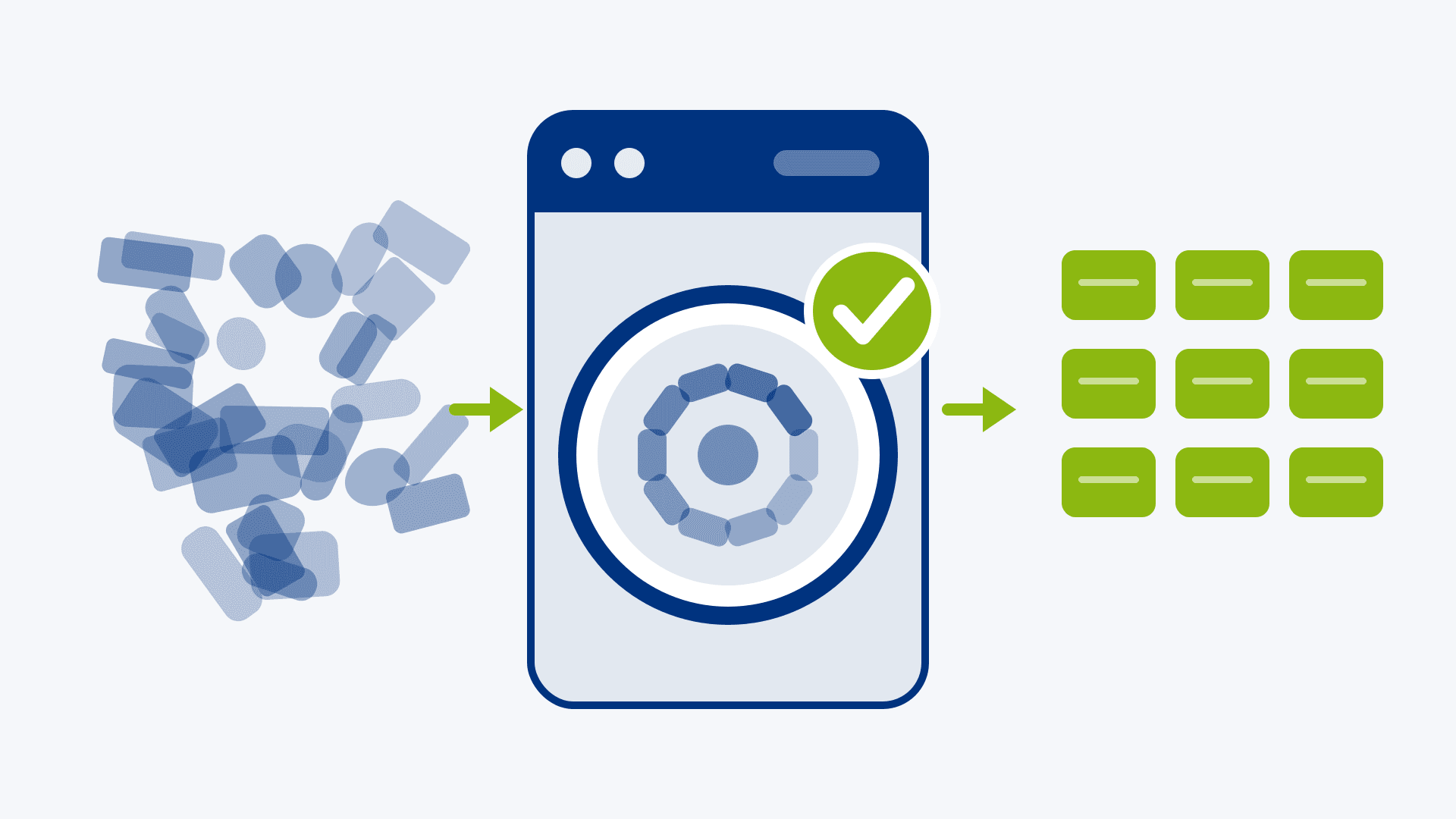
A materialized lake view works like a washing machine with programmes. You used to wash every item by hand, remembering the order, the temperature and when to stop. Now you load the drum, pick a programme and walk away. The machine handles the sequence, and a sensor tells you if something goes wrong.
The result is an ordinary table in your lakehouse. Power BI, notebooks and SQL queries read it like any other table, with the same permissions and governance. It fits naturally into the Bronze, Silver and Gold layers we describe in Data Cleansing with the Medallion Method: each layer becomes a view built on the one before.
Materialized lake views became generally available in March 2026.
How do materialized lake views clean data?
Five features matter most for data cleansing.
Quality rules built into the query
You can attach a rule to a view, such as "quantity must be above zero", and choose what happens when a row breaks it. Either the row is dropped, or the refresh fails. Here is a simple, illustrative example:
CREATE MATERIALIZED LAKE VIEW silver.clean_orders
(
CONSTRAINT valid_quantity CHECK (quantity > 0) ON MISMATCH DROP
)
AS
SELECT DISTINCT
order_id,
UPPER(TRIM(customer_code)) AS customer_code,
CAST(order_date AS DATE) AS order_date,
quantity
FROM bronze.raw_orders;
That one statement removes duplicates, tidies text, sets proper data types and rejects impossible quantities. Violation counts show up in Fabric's lineage view, so rejected rows are visible and not silently lost.
The choice between dropping and failing is a business decision, not a technical one. Dropping keeps reports flowing but hides bad records. Failing stops the line so someone has to look. Agree which you want for each rule before you build.
Automatic ordering and lineage
When one view is built on another, Fabric works out the dependencies and refreshes them in the right sequence, including across lakehouses. You can see the chain on screen, which answers the question "if this source changes, what breaks?" without a week of detective work.
Smarter refreshes
Fabric chooses between a full rebuild, an incremental update that processes only new or changed rows, or skipping the refresh when nothing has changed. Incremental refresh needs Delta change data feed switched on for the source tables, so ask your engineers to enable it.
Reading raw files directly into Bronze
A view can pull CSV or Parquet files from OneLake straight into a Bronze table, with an option to capture malformed rows in their own column for inspection. That removes a separate load step for file-based sources.
Monitoring
Run history, success rates, durations, common errors and data quality metrics are all visible in Fabric. It works like the warning lights on a car dashboard: you do not need to open the bonnet to know something needs attention.
When are materialized lake views not the right tool?
A washing machine is no use for baking. In the same way, materialized lake views suit SQL-shaped transformations on data that arrives in batches.
- Logic that is not SQL. Machine learning, calls to external services and complex Python processing still belong in Fabric notebooks.
- Very frequent streaming. If you need updates within a second, look at Real-Time Intelligence instead.
- One-off or rarely used queries. There is little point storing and refreshing a result nobody reads.
- PySpark authoring. You can define views in PySpark, but that option was still in preview when we checked and performs full refreshes only.
Most real medallion solutions mix approaches: views for the routine cleansing, notebooks for the awkward cases. Where to draw that line depends on your data and your team's skills.
How do you choose a first project?
Pick one report the business already argues about, and fix it end to end:
- Choose a report where people disagree about the numbers, such as monthly sales by customer.
- Land the raw source data in a Bronze schema, using a shortcut or mirroring where you can. We explain both in A Toolbox, Not a Moving Van.
- Write one Silver view that cleans and joins the data, with two or three quality rules the business has agreed.
- Write one Gold view shaped for the report, and point Power BI at it.
- Watch the first few refreshes in the monitoring view before adding more.
A small, visible win builds confidence faster than a grand design. It also shows your team what "clean" means in practice, which makes the next project easier to scope.
How can PTR help with materialized lake views?
Our Microsoft Fabric consultancy and Data Engineering and Data Integration teams design and build medallion solutions, and can move existing notebook and pipeline-based builds onto materialized lake views where that makes sense. Our tailored and blended learning training and mentoring then teach your engineers to run and extend the solution themselves.
To talk through your own data estate, get in touch about a free one-hour Microsoft Fabric consultation.
MD
Mandy Doward
Managing Director
PTR’s owner and Managing Director is a Microsoft certified Business Intelligence (BI) Consultant, with over 35 years of experience working with data analytics and BI.

Frequently Asked Questions
Couldn’t find the answer you were looking for? Feel free to reach out to us! Our team of experts is here to help.
Contact Us